

Many property owners assume resin flooring is only for industrial warehouses or that it lacks design flexibility. The reality is quite different. Modern resin flooring systems offer exceptional durability combined with stunning aesthetic options suitable for Queensland homes, retail spaces, and manufacturing facilities alike. This guide walks you through resin flooring types, benefits, installation considerations, and maintenance practices to help you make informed decisions for your property.
Table of Contents
- Key takeaways
- What is resin flooring and how does it work
- Types of resin flooring and their best uses
- Benefits and sustainability of resin flooring
- Installing and maintaining resin flooring in Queensland
- Discover expert resin flooring solutions with Floor X Industries
- Frequently asked questions
Key Takeaways
| Point | Details |
|---|---|
| Bonded seamless coating | Resin floors are liquid polymer coatings that bond directly to concrete to form seamless, hard wearing surfaces. |
| Main resin types | Epoxy, polyurethane, MMA and polyaspartic are the dominant chemistries with different performance traits for industrial, residential and outdoor use. |
| Prep drives success | Surface preparation accounts for about 80 percent of installation success, with grinding and moisture testing essential before applying resin. |
| Chemical resistance | The resin matrix blocks oils, acids and solvents to prevent staining and degradation, making it ideal for workshops and food facilities. |
| Wide property use | Resin flooring suits residential, commercial and industrial settings, offering durability and design flexibility. |
What is resin flooring and how does it work
Resin flooring refers to liquid polymer coatings applied directly to concrete substrates that cure through chemical reactions to form seamless, rock-hard surfaces. Resin flooring systems, primarily epoxy, polyurethane, MMA, and polyaspartic, are liquid-applied polymer coatings that cure via polymerization to form seamless, durable surfaces bonded to concrete substrates. Unlike tiles or vinyl that sit atop concrete, resin penetrates into the substrate during application, creating a molecular bond that resists delamination and provides exceptional mechanical strength.
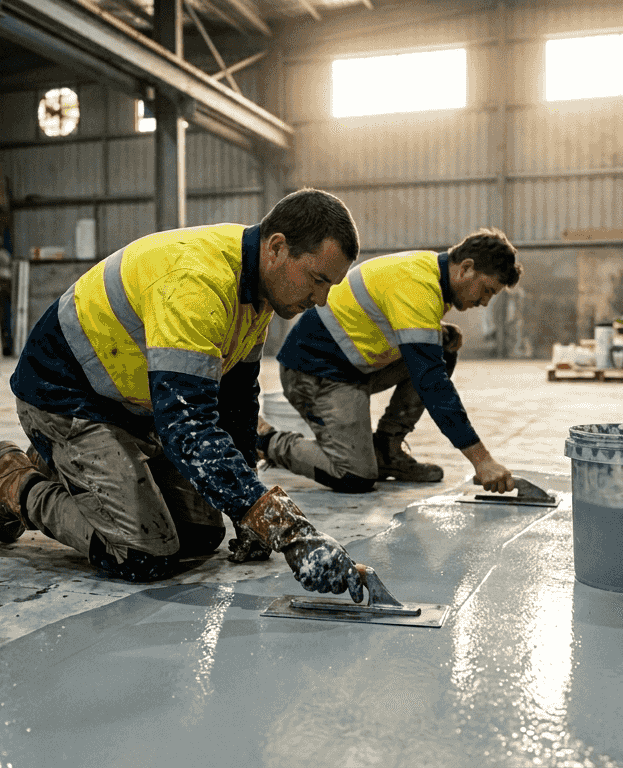
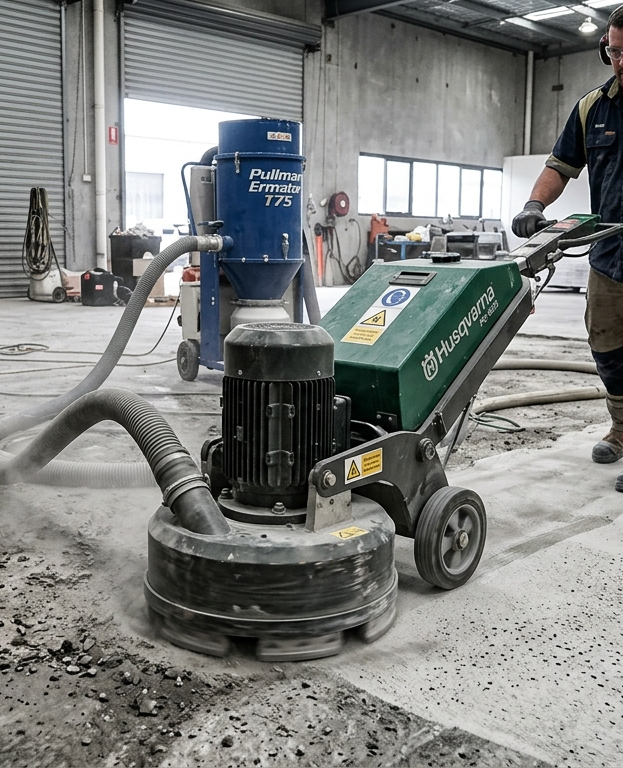
The process begins with thorough surface preparation. Concrete must be clean, dry, and properly profiled through grinding or shot blasting to expose pores that allow resin penetration. Once prepared, installers apply a primer coat that seeps into the concrete matrix. The main resin layer follows, often mixed with hardeners that trigger polymerization. As molecules cross-link during curing, the liquid transforms into a solid polymer network bonded directly to the concrete beneath.
Four main resin types dominate the market. Epoxy resins combine epoxide groups with polyamine hardeners, creating tough, chemical-resistant surfaces ideal for industrial environments. Polyurethane resins offer flexibility and UV stability, making them perfect for decorative residential floors exposed to sunlight. MMA (methyl methacrylate) resins cure rapidly even in cold conditions, suited for projects requiring quick turnaround. Polyaspartic resins combine fast curing with UV resistance, performing well in Queensland’s intense heat and humidity.
Chemical resistance sets resin flooring apart from conventional options. The dense polymer matrix blocks penetration by oils, acids, alkalis, and solvents that would stain or degrade other surfaces. This makes resin floors particularly valuable in automotive workshops, food processing facilities, and chemical storage areas where spills occur regularly.
Pro Tip: Surface preparation accounts for 80% of installation success. Rushing this step to save time almost always leads to adhesion failures and premature wear. Invest in proper grinding and moisture testing before application.
“The bond between properly applied resin and prepared concrete often exceeds the tensile strength of the concrete itself, meaning the concrete would fail before the coating detaches.”
Understanding choosing between epoxy polyurethane floors 2026 helps property owners match resin chemistry to their specific needs and environmental conditions.
Types of resin flooring and their best uses
Selecting the right resin type determines performance, longevity, and satisfaction with your flooring investment. Each resin chemistry brings distinct advantages and limitations that align with particular property types and usage patterns.
| Resin Type | Cure Time | UV Resistance | Chemical Resistance | Flexibility | Best Applications |
|---|---|---|---|---|---|
| Epoxy | 24-72 hours | Poor | Excellent | Low | Industrial floors, warehouses, commercial kitchens |
| Polyurethane | 12-24 hours | Excellent | Good | High | Residential garages, retail showrooms, patios |
| MMA | 1-2 hours | Good | Excellent | Medium | Cold storage, fast-turnaround projects, outdoor areas |
| Polyaspartic | 2-4 hours | Excellent | Very Good | Medium | All climates, high-traffic retail, residential decorative |
Epoxy resin dominates industrial applications due to its exceptional chemical resistance and compressive strength. The two-component system creates a rigid, impermeable surface that withstands forklift traffic, chemical spills, and thermal shock. However, epoxy yellows under UV exposure, making it less suitable for outdoor areas or spaces with significant natural light. Resin flooring systems include epoxy, polyurethane, MMA, and polyaspartic with varied chemical properties and application benefits. Queensland warehouses, manufacturing facilities, and commercial kitchens benefit most from epoxy’s durability and hygiene properties.
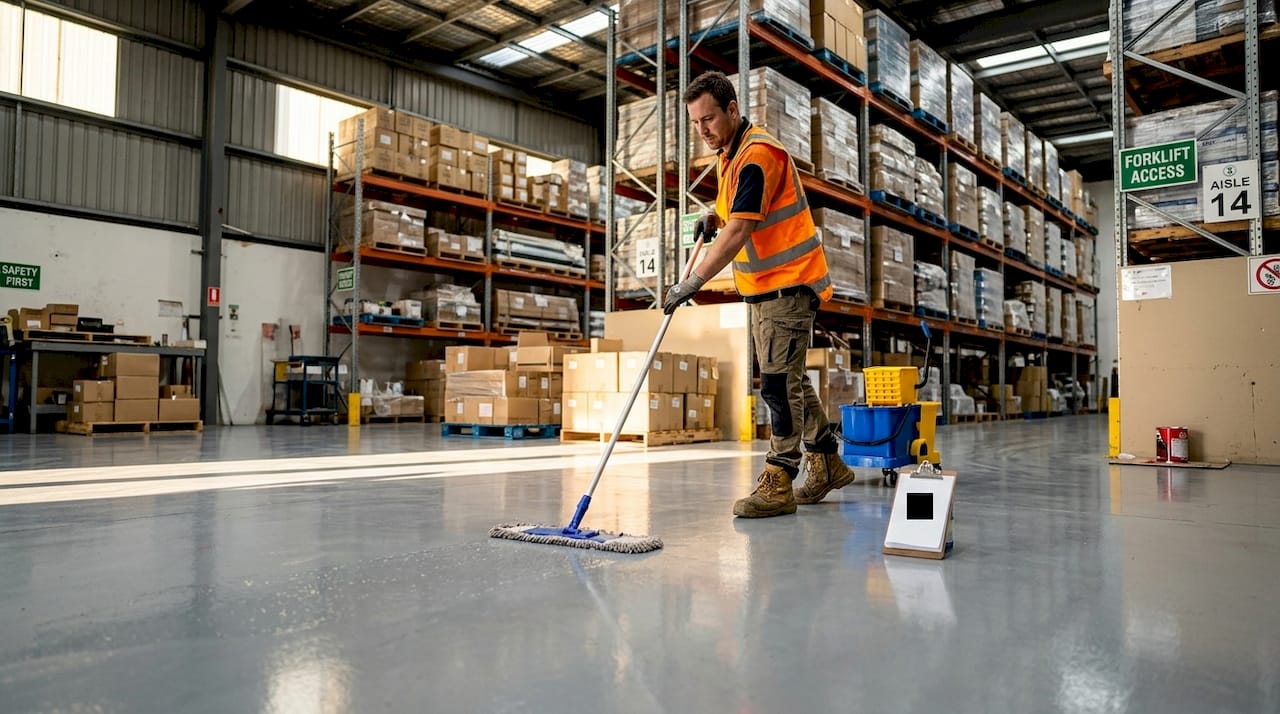
Polyurethane resin provides flexibility that epoxy lacks, allowing it to absorb impacts and thermal expansion without cracking. This elasticity makes polyurethane ideal for residential garages where temperature fluctuations occur or retail spaces where dropped objects are common. Its UV stability maintains colour and gloss even in sun-exposed areas like patios or showroom floors with large windows. The trade-off comes in slightly lower chemical resistance compared to epoxy, though polyurethane still outperforms most conventional flooring materials.
MMA resin cures through a different mechanism than epoxy or polyurethane, allowing application in temperatures as low as -40°C and rapid return to service within hours. This makes MMA invaluable for cold storage facilities, outdoor applications, and projects where downtime must be minimized. Food processing plants often choose MMA for its rapid cure and excellent chemical resistance. The strong odour during application requires good ventilation, but dissipates completely once cured.
Polyaspartic resin represents newer technology combining fast cure times with UV stability and good chemical resistance. Originally developed as a protective topcoat for other resins, polyaspartic now functions as a standalone system. Queensland’s climate suits polyaspartic particularly well, as it cures reliably in high humidity and maintains performance under intense UV exposure. Residential decorative floors, retail spaces, and mixed-use properties benefit from polyaspartic’s versatility.
Pro Tip: Match resin selection to your property’s primary challenge. Heavy chemical exposure demands epoxy. UV exposure requires polyurethane or polyaspartic. Time constraints favour MMA. Consider combining systems, using epoxy base coats with polyurethane or polyaspartic topcoats for optimal performance.
Exploring epoxy floor coatings and choosing between epoxy polyurethane floors 2026 provides detailed comparisons to guide your selection.
Benefits and sustainability of resin flooring
Beyond immediate performance advantages, resin flooring delivers long-term value through durability and environmental benefits that appeal to sustainability-focused Queensland property owners.
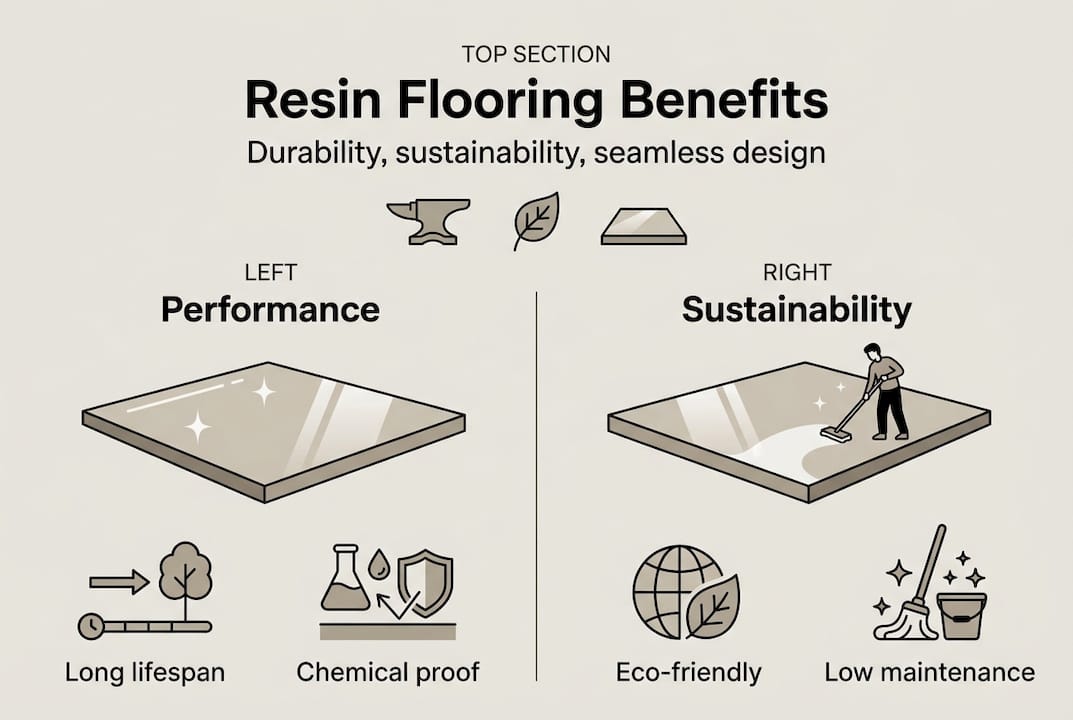
Durability translates directly to sustainability. A properly installed resin floor lasts 15-20 years in residential settings and 10-15 years in industrial environments with heavy traffic. Compare this to vinyl flooring requiring replacement every 5-7 years or carpet needing renewal every 3-5 years. Resin floors reduce lifetime emissions compared to frequent floor replacements when paired with low-carbon concrete. Each avoided replacement prevents manufacturing emissions, transportation impacts, and landfill waste from discarded materials.
The seamless nature of resin floors eliminates grout lines, seams, and joints where dirt, bacteria, and moisture accumulate. This inherent hygiene reduces cleaning chemical requirements and labour time compared to tiled or carpeted surfaces. Healthcare facilities, food preparation areas, and residential kitchens benefit from surfaces that can be sanitised with simple mopping rather than harsh disinfectants. Queensland’s humid climate makes this particularly valuable, as seamless surfaces resist mould and mildew growth that plagues porous flooring materials.
Resin flooring’s compatibility with low-carbon concrete amplifies sustainability benefits. When applied to concrete made with supplementary cementitious materials like fly ash or slag, the entire floor system achieves a significantly reduced carbon footprint compared to conventional flooring over structural concrete. Property owners pursuing Green Star or NABERS ratings find resin flooring contributes positively to environmental performance metrics.
Aesthetic versatility reduces the need for additional decorative elements. Resin floors can incorporate coloured aggregates, metallic pigments, or decorative flakes directly into the coating, eliminating separate floor coverings. This integration reduces material use and simplifies maintenance. A single resin floor replaces what might otherwise require concrete substrate, adhesive layer, underlayment, and surface covering, each with its own environmental impact.
Thermal properties contribute to energy efficiency. Resin floors applied over concrete slabs enhance thermal mass performance, helping stabilise indoor temperatures and reduce heating and cooling demands. In Queensland’s climate, this moderates peak cooling loads during hot afternoons. Some resin formulations incorporate reflective pigments that reduce heat absorption in industrial spaces, lowering air conditioning requirements.
“Choosing resin flooring over materials requiring frequent replacement prevents tonnes of waste from entering landfills while reducing the cumulative emissions associated with manufacturing, transport, and installation of multiple floor coverings over a building’s lifetime.”
Property owners committed to sustainability should evaluate resin flooring alongside other green building strategies. The combination of longevity, reduced maintenance demands, and compatibility with low-impact concrete makes resin an environmentally responsible choice. Exploring commercial concrete flooring solutions reveals how resin systems integrate with broader sustainable building approaches.
Installing and maintaining resin flooring in Queensland
Successful resin flooring depends on proper installation tailored to Queensland’s climate and diligent maintenance that preserves appearance and performance over decades.
Installation follows a systematic process where each step builds on the previous one. Proper installation of resin flooring involves detailed substrate preparation, precise application, and curing steps to ensure performance:
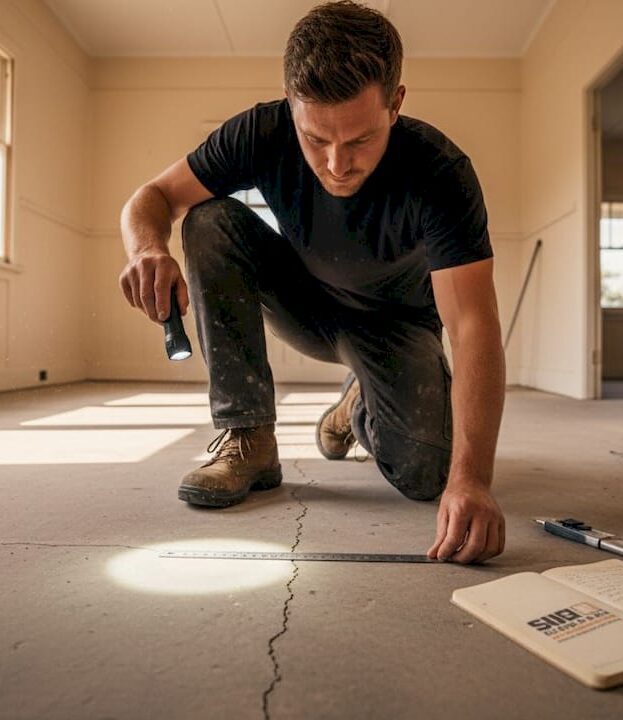
Surface assessment and preparation: Inspect concrete for moisture, contamination, and structural defects. Conduct calcium chloride or relative humidity tests to verify concrete is dry enough for resin application. Grind or shot blast the surface to achieve the profile specified by the resin manufacturer, typically CSP 2-3 for most systems.
Crack and joint repair: Fill cracks with epoxy or polyurethane crack fillers. Address expansion joints with flexible sealants that accommodate movement without transmitting stress to the resin coating.
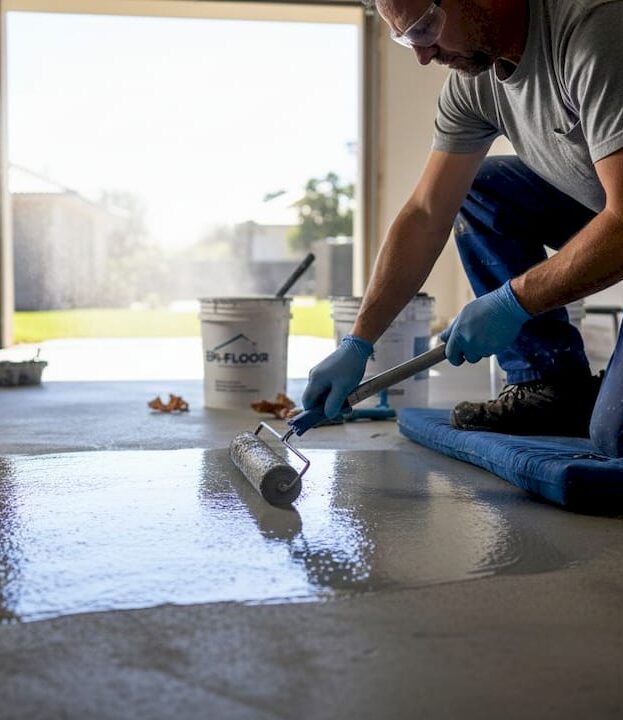
Primer application: Apply primer at the manufacturer’s specified coverage rate, ensuring complete penetration into the prepared concrete. Primers enhance adhesion and prevent outgassing that can create bubbles in subsequent coats.
Base coat application: Mix resin and hardener according to exact ratios, respecting pot life limitations. Apply base coat evenly using rollers or squeegees, maintaining consistent thickness. Queensland’s heat accelerates curing, so work in smaller batches during summer months.
Decorative elements (if specified): Broadcast coloured flakes, metallic pigments, or quartz aggregates into wet base coat. Allow partial cure before removing excess material.
Topcoat application: Apply protective topcoat once base coat reaches specified cure stage. Topcoats provide UV protection, chemical resistance, and desired gloss level. Multiple thin coats outperform single thick applications.
Curing and protection: Protect newly applied resin from moisture, dust, and traffic during cure period. Queensland humidity can extend cure times, so allow extra time before returning floors to service.
Queensland’s climate presents specific installation challenges. High humidity slows curing and can cause surface defects if moisture condenses on uncured resin. Schedule installations during lower humidity periods when possible, typically late winter and early spring. Temperature affects pot life and working time. Summer heat reduces working time significantly, requiring smaller batch sizes and faster application. Conversely, air conditioning can create temperature differentials that cause moisture condensation on concrete surfaces, interfering with adhesion.
Pro Tip: Schedule professional inspections every 2-3 years to detect early signs of wear, UV degradation, or adhesion issues. Addressing minor problems immediately prevents them from escalating into costly repairs or premature replacement.
Maintenance preserves resin flooring’s appearance and extends its service life:
- Regular cleaning: Sweep or vacuum daily to remove abrasive dirt particles. Mop weekly with pH-neutral cleaners diluted according to manufacturer instructions. Avoid acidic or highly alkaline cleaners that can dull or damage the surface.
- Spill management: Clean spills immediately, especially chemicals or oils that can penetrate through minor surface damage. Even chemical-resistant resins perform best when spills are removed promptly.
- Traffic patterns: Place walk-off mats at entrances to capture dirt and moisture before they reach resin floors. Consider floor protectors under furniture legs and equipment to prevent point loading damage.
- Periodic recoating: Apply fresh topcoats every 3-5 years in high-traffic areas to restore gloss and protection. This maintenance recoating costs a fraction of full replacement while extending floor life significantly.
DIY installation appeals to cost-conscious property owners but requires realistic assessment of skills and conditions. Small residential projects like single garages may suit experienced DIYers with proper equipment and ideal weather conditions. However, commercial and industrial applications demand professional installation to ensure warranty compliance and performance. Poor surface preparation, incorrect mixing ratios, or inadequate curing can result in failures that cost more to remedy than professional installation would have cost initially.
Property owners considering DIY should review epoxy flooring DIY guide 2026 for detailed instructions and realistic difficulty assessments. For commercial or industrial applications, industrial floor coatings installed by professionals provide peace of mind and performance guarantees.
Discover expert resin flooring solutions with Floor X Industries
Transforming your Queensland property with high-performance resin flooring requires expertise, quality materials, and understanding of local conditions. Floor X Industries specialises in epoxy floor coatings and industrial floor coatings tailored specifically for residential, commercial, and industrial applications across the Gold Coast and broader Queensland region.

Our team brings over a decade of experience applying resin systems in Queensland’s unique climate, understanding how humidity, temperature, and UV exposure affect installation and long-term performance. We offer comprehensive services from initial assessment through surface preparation, expert application, and ongoing maintenance support. Whether you need durable industrial flooring for a warehouse, decorative residential coating for your garage, or chemical-resistant surfaces for commercial kitchens, our tailored solutions deliver lasting results.
Property owners interested in DIY projects can access our epoxy flooring DIY guide 2026 for detailed instructions and product recommendations. For professional installation that maximises your investment and ensures warranty protection, contact Floor X Industries to discuss your project requirements and receive a detailed quote.
Frequently asked questions
What is resin flooring best used for?
Resin flooring excels in high-traffic environments requiring exceptional durability, chemical resistance, and seamless hygiene. Queensland’s residential, commercial, and industrial properties benefit from resin’s ability to withstand temperature fluctuations, humidity, and UV exposure common in the region. Manufacturing facilities, retail showrooms, automotive workshops, residential garages, and food preparation areas represent ideal applications where resin flooring’s combination of performance and aesthetics delivers maximum value. The seamless surface eliminates joints where contaminants accumulate, making resin particularly valuable in settings where cleanliness and safety are priorities. Explore industrial floor coatings to understand specific applications suited to your property type.
How long does resin flooring typically last?
Properly installed resin flooring generally lasts 10-20 years depending on resin type, usage intensity, and maintenance practices. Residential applications with moderate foot traffic often exceed 20 years, while industrial floors supporting heavy machinery and chemical exposure typically deliver 10-15 years before requiring replacement. Queensland’s climate affects longevity through UV exposure and thermal cycling, making professional installation critical for achieving maximum lifespan. Regular maintenance including prompt spill cleanup, periodic recoating, and protection from abrasive damage extends service life significantly. Epoxy systems in protected indoor environments often outlast polyurethane in sun-exposed areas, though polyaspartic topcoats mitigate UV degradation effectively.
Can I apply resin flooring myself or should I hire a professional?
DIY resin flooring installation can succeed for small residential projects when you possess proper tools, suitable weather conditions, and realistic assessment of your skills. Surface preparation accounts for most installation success, requiring concrete grinders, moisture meters, and understanding of substrate requirements. Small garages or workshops may suit experienced DIYers following manufacturer instructions carefully. However, commercial and industrial applications demand professional installation to ensure warranty compliance, proper chemical resistance, and longevity. Professionals bring specialised equipment, climate-controlled application techniques, and experience avoiding common pitfalls. Review epoxy flooring DIY guide 2026 to understand requirements before deciding. Poor DIY installations often cost more to remedy than professional application would have cost initially.
What maintenance does resin flooring require?
Resin flooring maintenance focuses on regular cleaning and protection from damage. Sweep or vacuum daily to remove abrasive dirt particles that can scratch the surface over time. Mop weekly using pH-neutral cleaners diluted according to manufacturer specifications, avoiding acidic or highly alkaline products that dull the finish. Clean spills immediately, particularly chemicals or oils, even though resin resists most substances. Place walk-off mats at entrances to capture dirt before it reaches flooring. Apply fresh topcoats every 3-5 years in high-traffic areas to restore gloss and protection. Periodic professional inspections detect early wear or damage, allowing prompt repairs that prevent minor issues from escalating into costly problems requiring full floor replacement.