

Most Queensland property managers assume all epoxy coatings deliver equal durability, but industrial-grade epoxy forms a cross-linked polymer matrix with mechanical properties that far exceed standard residential formulations. Understanding what sets industrial epoxy apart helps you select the right flooring solution for warehouses, factories, and commercial spaces facing heavy traffic and chemical exposure. This guide explains industrial-grade epoxy’s composition, compares it with alternatives like polyurethane and polished concrete, and shows you how to maximise its performance in Queensland’s demanding commercial environments.
Table of Contents
- Understanding Industrial-Grade Epoxy: Composition And Properties
- Comparing Industrial Epoxy With Other Floor Coatings And Finishes
- Practical Applications And Benefits Of Industrial-Grade Epoxy Flooring In Queensland Businesses
- Maintaining And Maximising The Lifespan Of Industrial-Grade Epoxy Floors
- Explore Industrial-Grade Epoxy Flooring Solutions With Floor X Industries
- Frequently Asked Questions
Key takeaways
| Point | Details |
|---|---|
| Two-part chemical system | Industrial epoxy combines resin and hardener to create a durable polymer matrix through chemical curing |
| Superior resistance properties | Offers exceptional abrasion, impact, chemical, and thermal resistance up to 300°C for demanding floors |
| Queensland commercial applications | Ideal for warehouses, factories, retail spaces, and commercial kitchens across Queensland |
| Outperforms alternatives | Delivers better durability than polyurethane coatings and polished concrete in high-wear settings |
| Maintenance extends lifespan | Proper cleaning protocols and timely repairs maximise the 10-20 year service life |
Understanding industrial-grade epoxy: composition and properties
Industrial-grade epoxy is a two-part thermosetting system consisting of resin and hardener components that undergo a chemical curing reaction. When mixed in precise ratios, these components form a highly cross-linked polymer matrix that bonds permanently to concrete substrates. This molecular structure creates the exceptional mechanical properties that distinguish industrial epoxy from standard coatings.
The curing process transforms liquid components into a rigid, three-dimensional network. This cross-linking reaction generates a material with outstanding tensile strength, typically ranging from 10,000 to 15,000 psi, and shear strength exceeding 3,000 psi. These values mean industrial epoxy can withstand the concentrated loads from forklifts, pallet jacks, and heavy machinery without cracking or delaminating.
Abrasion resistance stands out as a critical property for commercial floors. Industrial epoxy maintains its integrity under constant foot traffic, wheeled equipment, and dragged loads that would quickly wear through standard coatings. Impact resistance prevents chipping and cracking when tools or materials drop onto the surface, a common occurrence in warehouses and manufacturing facilities.
Chemical stability makes industrial epoxy ideal for environments where oils, solvents, acids, and alkalis contact the floor. The cured polymer resists degradation from petroleum products, cleaning chemicals, and many industrial substances. Thermal stability extends to service temperatures up to 300°C, though most commercial applications operate well below this threshold.
Adhesion strength to concrete typically exceeds the tensile strength of the concrete itself. This means properly applied epoxy floor coatings will not delaminate under normal conditions. The bond forms through mechanical interlocking with the concrete surface and chemical adhesion to the substrate.
| Property | Typical Value | Benefit for Industrial Floors |
|---|---|---|
| Tensile Strength | 10,000-15,000 psi | Withstands heavy loads without cracking |
| Abrasion Resistance | Taber abraser: <50 mg loss | Maintains surface integrity under traffic |
| Chemical Resistance | Resists oils, solvents, acids | Protects against spills and cleaning agents |
| Thermal Stability | Up to 300°C service temp | Suitable for hot manufacturing processes |
| Adhesion to Concrete | >2,000 psi | Prevents delamination and lifting |
Common resistances relevant to Queensland industrial environments include:
- Petroleum products and hydraulic fluids from machinery
- Cleaning chemicals and disinfectants used in food processing
- Acids and alkalis from manufacturing processes
- Salt spray and moisture in coastal industrial areas
- UV exposure in partially covered or outdoor industrial spaces
Pro Tip: Always request technical data sheets from your epoxy supplier showing specific chemical resistance and mechanical properties tested according to Australian standards, then verify these specifications match your site’s actual operating conditions including temperature ranges and chemical exposures.
Comparing industrial epoxy with other floor coatings and finishes
Property managers often evaluate industrial epoxy alongside polyurethane coatings and polished concrete when selecting commercial flooring. Each option offers distinct characteristics that suit different operational requirements and budget constraints. Understanding these differences helps you make informed decisions for Queensland business environments.

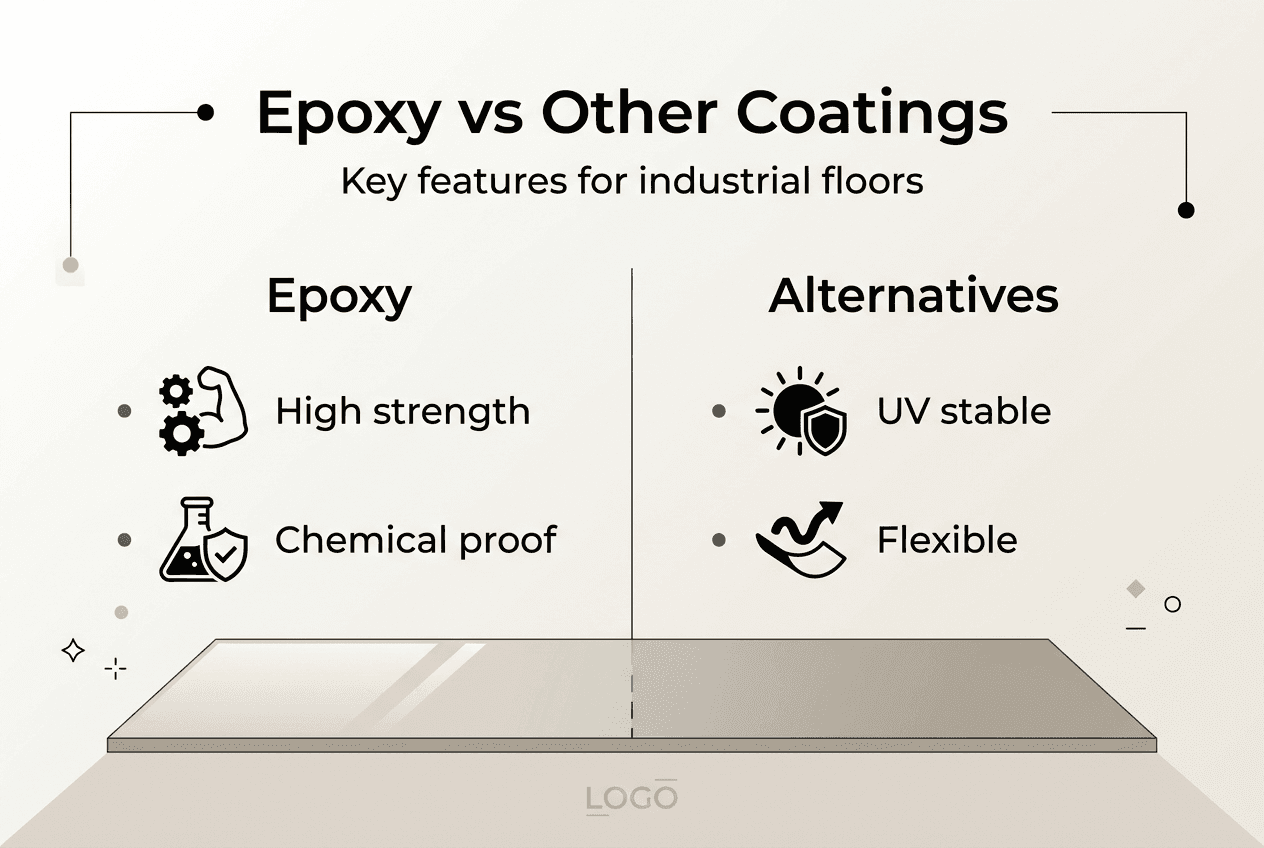
Polyurethane coatings provide flexibility and UV resistance superior to epoxy, making them suitable for areas with thermal cycling or direct sunlight exposure. However, industrial-grade epoxy offers superior abrasion resistance and chemical durability compared to polyurethane, particularly in high-wear commercial environments. Polished concrete delivers an economical, low-maintenance option but lacks the chemical protection and customisation options epoxy provides.
| Feature | Industrial Epoxy | Polyurethane | Polished Concrete |
|---|---|---|---|
| Abrasion Resistance | Excellent | Good | Very Good |
| Chemical Resistance | Excellent | Good | Fair |
| Initial Cost | Moderate to High | High | Low to Moderate |
| Maintenance Requirements | Low | Low | Very Low |
| Thermal Stability | Excellent (up to 300°C) | Good (up to 120°C) | Excellent |
| Customisation Options | Extensive (colours, flakes, metallics) | Moderate | Limited (stains, dyes) |
| Installation Time | 3-7 days | 2-5 days | 1-3 days |
Industrial epoxy advantages for heavy-use settings:
- Superior chemical protection against oils, solvents, and industrial substances
- Higher abrasion resistance maintains appearance under constant traffic
- Seamless surface eliminates joints where contaminants accumulate
- Customisable aesthetics with colours and decorative options
- Self-levelling properties create smooth, easy-to-clean surfaces
Polyurethane coating considerations:
- Better flexibility accommodates substrate movement and thermal expansion
- Enhanced UV stability prevents yellowing in sunlit areas
- Softer surface may show scratches more readily than epoxy
- Higher material costs offset by faster installation times
Polished concrete trade-offs:
- Lower upfront investment suits budget-conscious projects
- Porous surface requires sealing for chemical protection
- Limited colour and design options compared to coatings
- Excellent durability in dry environments without chemical exposure
Industrial epoxy often outperforms alternatives in warehouses, manufacturing facilities, and commercial kitchens where chemical spills, heavy equipment, and hygiene requirements demand robust protection. The seamless, non-porous surface resists bacterial growth and simplifies cleaning protocols, critical factors in food processing and pharmaceutical environments. When comparing epoxy vs polyurethane floors, consider your specific operational demands rather than cost alone.
Pro Tip: Calculate lifecycle costs over 15-20 years rather than focusing solely on initial installation expenses, as industrial epoxy’s durability and low maintenance requirements often deliver better long-term value despite higher upfront investment compared to alternatives like polished concrete for warehouses.
Practical applications and benefits of industrial-grade epoxy flooring in Queensland businesses
Queensland businesses across diverse sectors rely on industrial-grade epoxy flooring to address demanding operational requirements. Warehouses use epoxy to protect concrete from forklift traffic and pallet movement. Manufacturing facilities benefit from chemical resistance where oils and solvents contact floors. Commercial garages require abrasion resistance from constant vehicle movement. Retail showrooms leverage decorative epoxy options for attractive, durable surfaces. Commercial kitchens depend on seamless, hygienic flooring that withstands cleaning chemicals and temperature fluctuations.
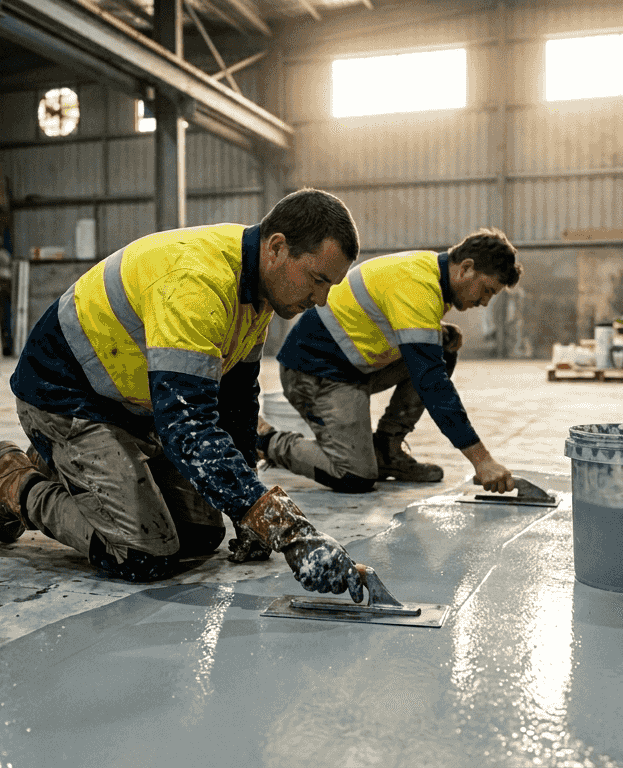
The application process for industrial epoxy follows systematic steps to ensure proper adhesion and performance:
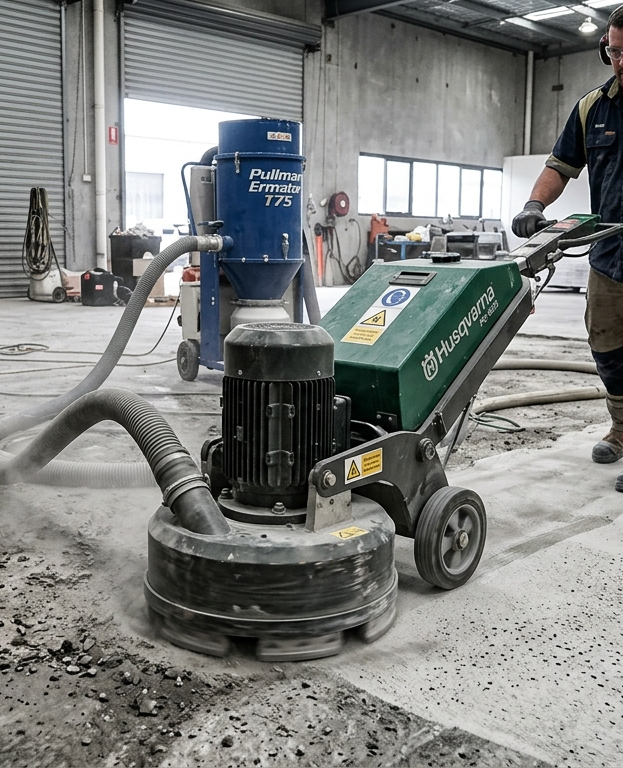
- Surface preparation through grinding or shot blasting removes contaminants and creates mechanical profile
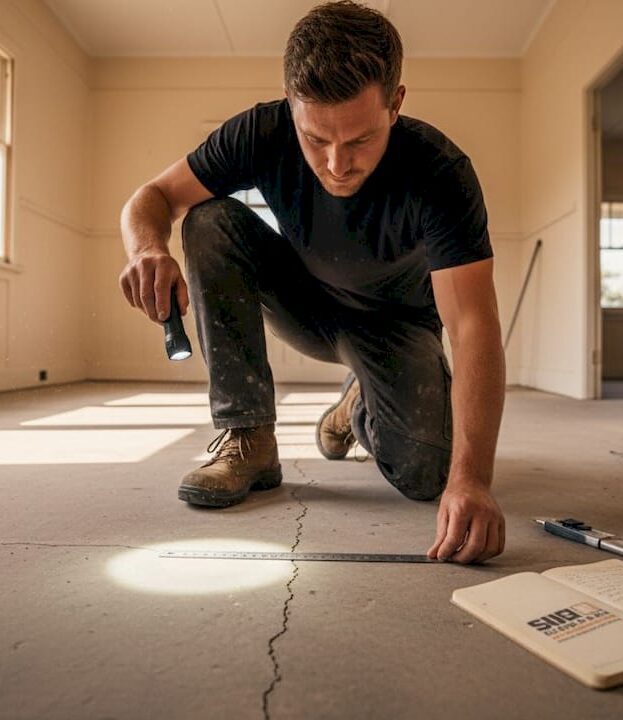
- Crack and joint repair fills defects with epoxy paste or polyurea compounds
- Moisture testing confirms substrate is dry enough for epoxy application
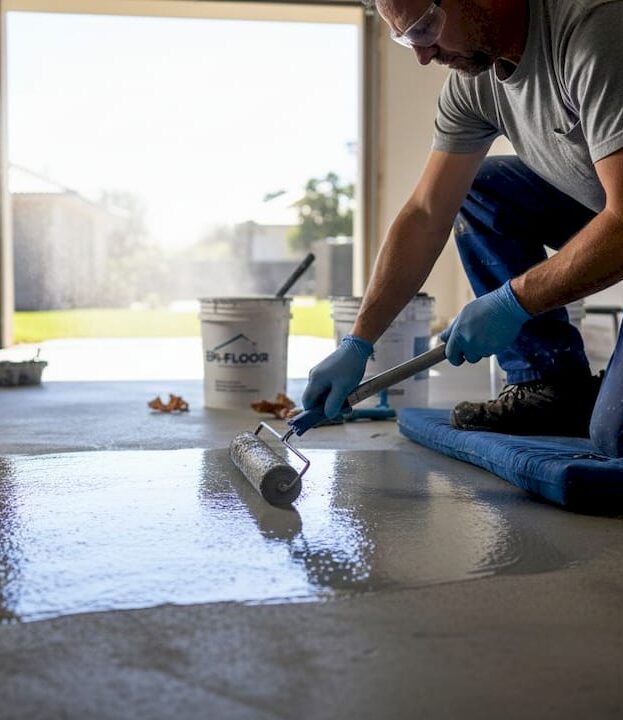
- Primer coat application enhances adhesion and seals porous concrete
- Base coat installation builds thickness and provides primary protection
- Decorative elements like colour flakes or metallic pigments are broadcast if specified
- Top coat sealing creates final protective layer and desired sheen level
- Curing period allows chemical cross-linking to complete before use
Key benefits for Queensland property managers and business owners:
- Exceptional durability withstands decades of heavy use without replacement
- Chemical resistance protects against spills common in industrial operations
- Slip resistance options enhance workplace safety through textured additives
- Maintenance ease requires only regular sweeping and occasional mopping
- Aesthetic versatility offers colours and finishes matching brand identity
- Seamless installation eliminates grout lines harboring bacteria
- Light reflectivity improves visibility and reduces lighting costs
Thermal stability proves particularly valuable in Queensland’s industrial environments. Epoxy maintains its properties through temperature variations common in warehouses without climate control. Coastal facilities benefit from moisture resistance preventing salt-induced concrete deterioration. The subtropical climate’s humidity and occasional flooding make waterproof, chemical-resistant flooring essential for protecting concrete substrates.
Queensland’s industrial conditions influence epoxy selection. High-traffic warehouses near ports require maximum abrasion resistance. Food processing facilities need antimicrobial additives and seamless installations meeting health regulations. Automotive workshops demand oil resistance and easy cleaning. Understanding these specific requirements helps you specify appropriate epoxy systems for your facility.
For detailed guidance on preparing surfaces and applying coatings, consult comprehensive resources on durable epoxy solutions Queensland or review step-by-step instructions in an epoxy flooring application guide tailored for Australian conditions.
Maintaining and maximising the lifespan of industrial-grade epoxy floors
Proper maintenance significantly extends the service life of industrial-grade epoxy floors in Queensland commercial environments. Routine care preserves the surface’s appearance and protective properties, while neglect accelerates wear and necessitates costly repairs or replacement. Implementing systematic maintenance protocols maximises your flooring investment.
Daily and periodic maintenance steps:
- Sweep or vacuum regularly to remove abrasive dirt and debris that scratch the surface
- Clean spills immediately, especially chemicals, to prevent staining or surface damage
- Mop with pH-neutral cleaners avoiding harsh acids or alkalis that degrade epoxy
- Place walk-off mats at entrances to capture dirt before it reaches the floor
- Inspect high-traffic areas monthly for signs of wear or damage requiring attention
- Schedule professional deep cleaning annually to remove embedded contaminants
- Avoid metal tools or abrasive scrubbers that scratch the epoxy surface
Spill management requires prompt action. Oil and chemical spills should be absorbed with appropriate materials, then the area cleaned with suitable solvents or degreasers. Allowing spills to sit increases the risk of staining and potentially compromising the epoxy’s chemical resistance over time.
Inspecting for wear or damage helps catch problems early. Look for areas where the coating appears thin, discoloured, or showing concrete beneath. Check for cracks, chips, or delamination around joints and edges. Address these issues promptly through professional touch-ups before they expand into larger problems requiring extensive repairs.
Common mistakes that reduce epoxy lifespan:
- Using acidic or alkaline cleaners not rated for epoxy surfaces
- Dragging sharp metal objects across the floor without protective measures
- Allowing standing water in areas with compromised sealing
- Ignoring early signs of wear until major repairs become necessary
- Applying incompatible coatings or sealers over the original epoxy
Queensland’s environmental factors influence maintenance needs. High humidity in coastal areas requires vigilant moisture control to prevent substrate issues beneath the epoxy. Dust from nearby construction or agricultural operations necessitates more frequent cleaning. Seasonal temperature swings, while less extreme than southern states, still warrant monitoring for any thermal stress on the coating.
Pro Tip: Follow manufacturers’ specific maintenance guidelines for your epoxy system and engage qualified professionals for repairs rather than attempting DIY fixes that may create adhesion problems or aesthetic mismatches, ensuring your epoxy floor coatings service maintains optimal performance throughout its service life.
Explore industrial-grade epoxy flooring solutions with Floor X Industries
Floor X Industries specialises in industrial floor coatings Queensland businesses trust for demanding commercial environments. Based on the Gold Coast with over a decade of experience, we understand the unique challenges Queensland property managers face, from coastal humidity to heavy industrial use. Our comprehensive service offerings span consultation, surface preparation, application, and ongoing support tailored to your operational requirements.

We deliver expert epoxy floor coatings using proven techniques compliant with Australian standards, ensuring your floors withstand years of demanding use. Whether you’re upgrading a warehouse, factory, or commercial kitchen, our team provides customised solutions matching your durability needs and aesthetic preferences. Explore our detailed epoxy flooring application guide or contact us for personalised advice on transforming your commercial space with industrial-grade epoxy flooring.
Frequently asked questions
What is industrial-grade epoxy?
Industrial-grade epoxy is a two-part chemical system combining resin and hardener that cures into a cross-linked polymer matrix with exceptional mechanical properties. This formulation delivers superior abrasion resistance, chemical stability, and adhesion strength compared to standard residential epoxy coatings. The cured material bonds permanently to concrete substrates, creating a seamless, durable surface ideal for commercial and industrial environments facing heavy traffic and chemical exposure.
Is industrial-grade epoxy flooring suitable for Queensland’s climate?
Yes, industrial epoxy performs excellently in Queensland’s subtropical conditions. The cured polymer resists moisture, humidity, and temperature fluctuations common across the state. Thermal stability up to 300°C far exceeds Queensland’s ambient temperatures, while chemical resistance protects against salt spray in coastal areas. Properly formulated industrial epoxy Queensland systems account for local environmental factors, ensuring long-term performance in diverse business settings from Brisbane to Cairns.
How long does industrial-grade epoxy flooring last in commercial settings?
Industrial epoxy typically lasts 10 to 20 years in commercial environments when properly installed and maintained. Actual lifespan depends on traffic intensity, chemical exposure, and maintenance practices. Warehouses with constant forklift traffic may see wear after 10-15 years, while retail spaces with lighter use often exceed 20 years. Routine cleaning and timely repairs of minor damage significantly extend service life, maximising your flooring investment.
What factors affect the cost of industrial-grade epoxy flooring?
Floor area represents the primary cost driver, with larger projects benefiting from economies of scale. Surface preparation requirements vary based on concrete condition, existing coatings, and moisture levels. Epoxy type and thickness influence material costs, with high-performance formulations commanding premium prices. Additional features like colour customisation, decorative flakes, metallic effects, and anti-slip additives increase overall investment. Complex layouts with multiple rooms or detailed edge work also affect labour costs.
Can industrial-grade epoxy flooring be applied over existing floors?
Yes, industrial epoxy typically applies over properly prepared concrete floors, including those with previous coatings. Surface preparation is critical and involves removing failing coatings, repairing cracks, and creating adequate profile for adhesion. The concrete must be clean, dry, and structurally sound before epoxy application. Professional assessment determines if your existing floor requires additional preparation or repairs to ensure successful epoxy installation and long-term performance.