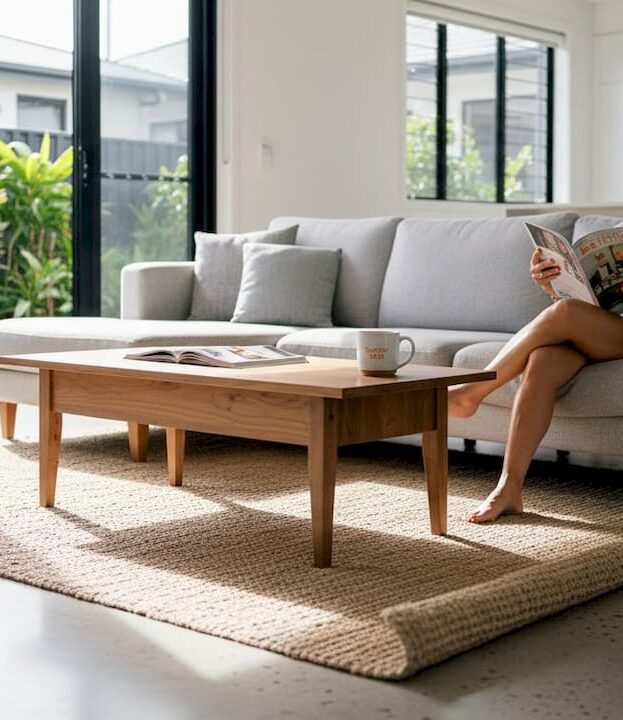


Most people assume that a floor looking this good must be fragile, expensive to maintain, or simply impractical for a busy Queensland home or business. That assumption is wrong. Polished concrete has quietly become one of the most sought-after flooring solutions across the state, and for good reason. It handles the heat, the humidity, the foot traffic, and the occasional spilled coffee without complaint. This article walks you through the real, evidence-backed advantages of polished concrete, from how it’s made to why it outperforms most alternatives over the long run.
Table of Contents
- What is polished concrete and how is it made?
- Durability and lifespan compared to other flooring types
- Low maintenance and indoor air quality benefits
- Eco-friendly and energy-smart flooring choice
- Versatility and design options for modern spaces
- Explore polished concrete solutions for your Queensland property
- Frequently asked questions
Key Takeaways
| Point | Details |
|---|---|
| Exceptional durability | Polished concrete stands up to heavy foot traffic and lasts decades with little wear. |
| Easy, low-cost maintenance | Routine sweeping and mopping are all that’s needed to keep floors looking their best. |
| Healthier indoor environments | Non-porous floors help keep dust, allergens, and irritants to a minimum inside your space. |
| Eco and energy efficient | Minimal material use and improved thermal mass support energy savings and sustainability. |
| Stylish, versatile designs | A range of colours and finishes can be tailored to suit any Queensland home or workplace. |
What is polished concrete and how is it made?
Understanding how polished concrete is made helps you better appreciate the benefits it brings. At its core, polished concrete is not a coating applied on top of a slab. It is the slab itself, refined and transformed through a mechanical process that reveals a hard, smooth, and highly reflective surface.
The process follows a clear sequence of stages:
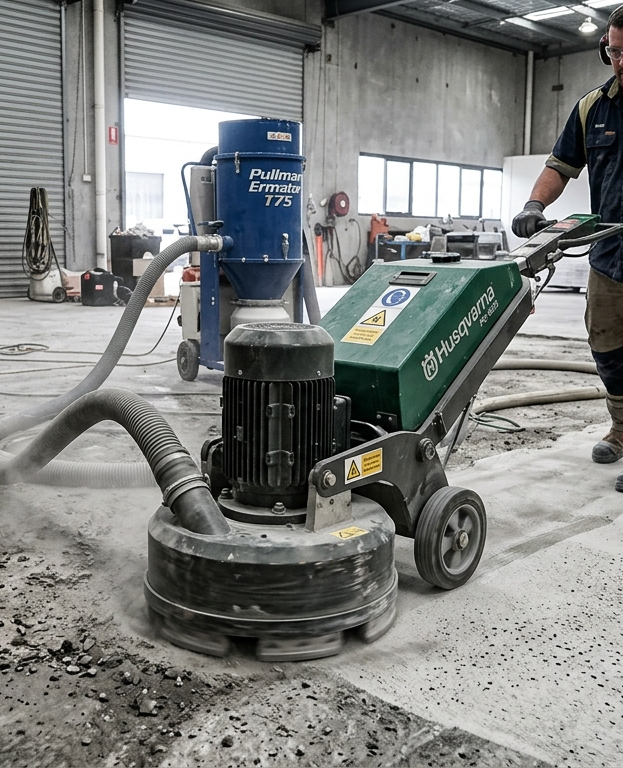
- Coarse grinding removes surface imperfections, old coatings, and any unevenness using diamond-tipped tools.
- Progressive grinding moves through finer and finer diamond grits, each pass smoothing the surface further.
- Chemical densifier application penetrates the concrete and reacts with calcium silicate to harden the surface from within.
- Polishing passes continue with ultra-fine grits to build the desired sheen.
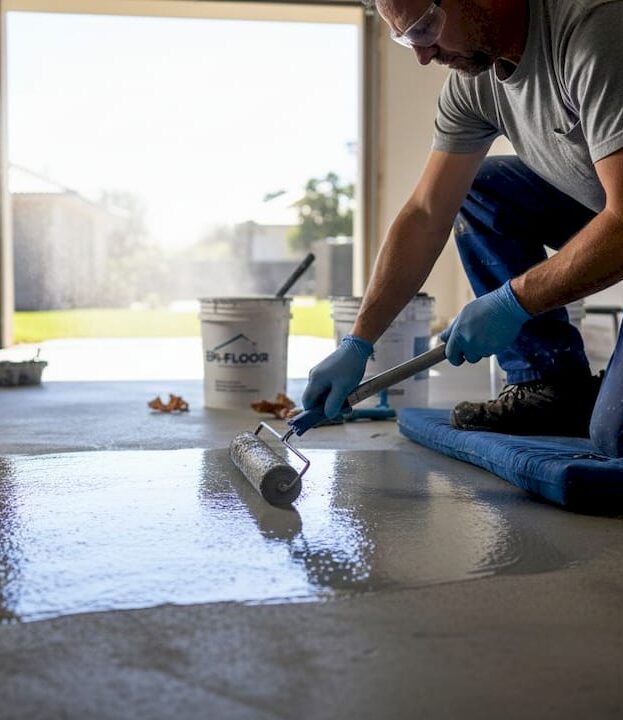
- Sealing or guard application locks in the finish and protects against staining.
As this multi-stage process shows, polished concrete relies on densifiers for surface hardness and a methodical grinding sequence rather than surface coatings. The result is a floor that is genuinely part of the building structure, not something sitting on top of it.
You can choose your final gloss level, from a low-sheen matte to a mirror-like high gloss. Each level suits different spaces and aesthetics. For a deeper look at what the process involves for your specific property, our concrete polishing guide covers the full picture for both homeowners and commercial managers.
Pro Tip: The quality of the grinding sequence matters enormously. Skipping grit stages to save time leaves micro-scratches that dull the final finish. Always ask your contractor how many stages they use.
Durability and lifespan compared to other flooring types
Now that we’ve looked at how polished concrete is created, let’s see how it stacks up in everyday use. Queensland properties face real wear. Retail floors handle thousands of footsteps daily. Warehouse floors carry forklifts and heavy pallets. Even a busy family home puts constant stress on its surfaces.
Polished concrete handles all of this with ease. The densification process raises surface hardness to Mohs scale 9, which is just below diamond on the hardness scale. To put that in plain terms, it is harder than most natural stone tiles and significantly harder than vinyl or timber.
The lifespan figures are equally impressive. Polished concrete lasts 20 to 30-plus years with minimal maintenance, far outlasting vinyl (typically 10 to 15 years), standard epoxy coatings (5 to 10 years), and ceramic tiles (which chip and grout deteriorates over time).
| Flooring type | Typical lifespan | Maintenance level | Abrasion resistance |
|---|---|---|---|
| Polished concrete | 20 to 30+ years | Low | Very high (Mohs 9) |
| Epoxy coating | 5 to 10 years | Low to medium | Medium |
| Vinyl plank | 10 to 15 years | Medium | Low to medium |
| Ceramic tile | 10 to 20 years | Medium to high | Medium (grout degrades) |
| Carpet | 5 to 10 years | High | Very low |
For property managers and homeowners, this translates directly into:
- Lower replacement costs over the life of the building
- Fewer disruptions from floor repairs or full replacements
- Consistent appearance that doesn’t fade, peel, or warp
- Confidence in high-traffic zones like entryways, showrooms, and corridors
If you manage a warehouse or industrial facility, the case is even stronger. Our guide on warehouse flooring durability explains exactly why polished concrete outperforms alternatives in heavy-use environments. For a side-by-side breakdown of flooring types, see our flooring type comparisons resource.
Low maintenance and indoor air quality benefits
Beyond toughness, polished concrete simplifies cleaning and enhances your indoor environment. This is one of the most underrated advantages, especially for commercial property managers juggling multiple responsibilities.
Day-to-day care is genuinely straightforward:
- Dry sweeping or dust mopping removes surface debris
- Damp mopping with a neutral pH cleaner handles most spills and marks
- Occasional resealing every few years maintains the protective layer
- No waxing, stripping, or specialised products required
The sealed, non-porous surface resists stains, spills, and chemicals, and it improves indoor air quality compared to carpet. Carpet fibres trap dust mites, pet dander, mould spores, and allergens. Polished concrete offers none of those hiding spots.
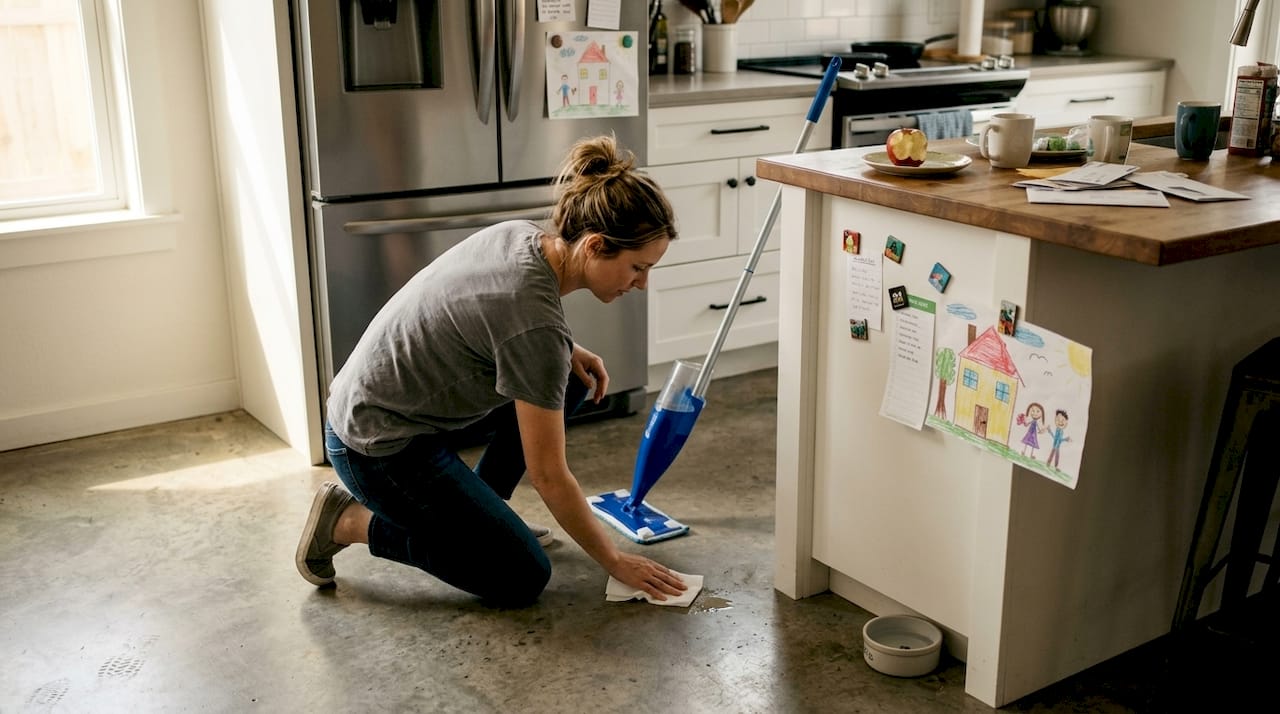
For households with children, pets, or anyone prone to allergies, this is a meaningful health benefit. Spills sit on the surface rather than soaking in, which means they’re easier to clean and less likely to cause lasting damage or odour.
Pro Tip: Wipe up spills as soon as they happen, especially acidic liquids like citrus juice or wine. Even a sealed surface benefits from prompt attention. Pair this habit with our routine concrete floor care tips to keep your floor looking its best for decades.
Eco-friendly and energy-smart flooring choice
Eco-friendly homes and offices are more important than ever, and polished concrete delivers on sustainability as well as style. Queensland’s push toward greener buildings makes this benefit particularly relevant for anyone planning a renovation or new fit-out.
The environmental case for polished concrete is built on several solid points:
- No new materials required when an existing concrete slab is polished rather than covered
- Minimal construction waste compared to installing new flooring over the slab
- Low VOC emissions during and after installation, contributing to better indoor air quality
- Thermal mass properties that absorb heat during the day and release it at night, reducing reliance on air conditioning
As research confirms, polished concrete reuses existing slabs, is low VOC, and reduces waste during installation. That’s a meaningful advantage over options like vinyl plank or carpet, which require manufacturing, packaging, and eventual disposal.
“In Queensland’s warm climate, the thermal mass of a polished concrete floor can meaningfully reduce cooling costs by absorbing heat during peak hours and releasing it slowly overnight, reducing the load on your air conditioning system.”
Here’s a quick comparison of how polished concrete stacks up on key sustainability measures:
| Factor | Polished concrete | Vinyl plank | Carpet |
|---|---|---|---|
| New materials needed | No (uses existing slab) | Yes | Yes |
| VOC emissions | Very low | Medium to high | Medium |
| End-of-life waste | Minimal | High | High |
| Thermal mass benefit | High | None | None |
For Queensland homeowners interested in sustainable flooring practices, polished concrete is one of the most straightforward choices available. If you’re also thinking about how your floor choice affects temperature control, our guide on decorative concrete for climate control goes into more detail.
Versatility and design options for modern spaces
Aside from being tough and easy on the planet, polished concrete is also as stylish as you want it to be. This is where a lot of people are genuinely surprised. The assumption that concrete means grey, cold, and industrial simply doesn’t hold up anymore.
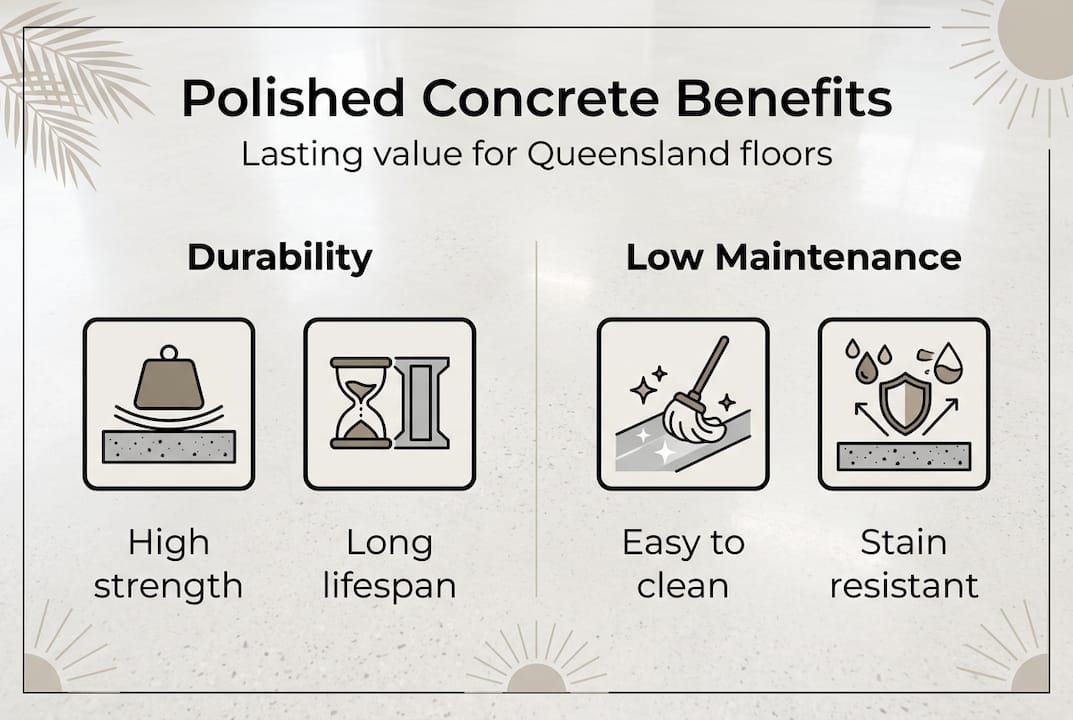
Modern polished concrete can be finished to different gloss levels and incorporate decorative aggregates or dyes for unique, tailored looks. Whether you’re fitting out a boutique retail space in Broadbeach or renovating a family home in the hinterland, there’s a finish that suits your vision.
Design options include:
- Gloss levels ranging from matte and satin through to high-gloss mirror finishes
- Exposed aggregate that reveals the natural stones within the slab for a textured, organic look
- Integral dyes and stains that add colour without hiding the concrete’s natural character
- Saw-cut patterns that create geometric designs or simulate tile layouts
- Custom borders and feature zones for retail or commercial spaces that need visual wayfinding
Polished concrete works equally well in contemporary open-plan homes, heritage-style commercial spaces, busy retail showrooms, and large warehouses. It doesn’t compete with your furniture or décor. It complements it.
For a full overview of what’s possible with decorative finishes in Queensland, our guide on decorative concrete floor options is worth bookmarking.
Explore polished concrete solutions for your Queensland property
Now that you know the advantages and options for polished concrete, here’s how to put it into action locally. At FloorX Industries, we’ve spent over a decade transforming concrete slabs across Queensland into floors that genuinely perform and look exceptional.
Whether you’re a homeowner wanting a low-maintenance, allergy-friendly surface or a commercial property manager looking for a floor that handles heavy traffic without constant upkeep, our team can help. Explore our professional concrete polishing services to see what’s possible for your space. If you want to go deeper before making a decision, our in-depth polishing guide covers everything from surface preparation to finish selection. For warehouses and industrial sites, our dedicated commercial polished concrete page outlines the specific solutions we offer for high-demand environments.
Frequently asked questions
How long do polished concrete floors last in Queensland homes?
With proper care, polished concrete floors in Queensland typically last 20 to 30 years or more, far outlasting most common alternatives like vinyl, carpet, or standard epoxy coatings.
What regular maintenance does polished concrete need?
Routine sweeping and mopping with a damp mop is usually enough. Its sealed, non-porous surface makes ongoing care simple and eliminates the need for waxing or specialised cleaning products.
Does polished concrete work for allergy-prone households?
Yes. Its non-porous surface resists dust mites, pet dander, and allergens, which means it actively improves indoor air quality compared to carpet or other soft floor coverings.
Is it possible to have decorative finishes or colours?
Absolutely. Polished concrete supports various decorative finishes including dyes, exposed aggregates, and custom gloss levels, giving you a wide range of aesthetic options to suit any interior style.